The phrase digital twin invites a metaphysical mistake. A twin sounds like a second instance of the thing: the aircraft again, the building again, the patient again. In practice, a digital twin is a computer model connected to a physical system and maintained for a purpose. It may be excellent at estimating bearing wear and useless at predicting why an operator will ignore the warning.
That limitation is not a failure. Selection is what makes a model usable. The error begins when a decision-maker treats the selected variables as the whole object, the latest sensor reading as ground truth or a persuasive visualization as proof that the twin is credible.
What makes a model a digital twin?
NIST describes a digital twin as a particular type of computer model of a physical system, such as a machine or building, with the potential to model aspects of that system accurately and flexibly. Its advanced-manufacturing work describes twins as synchronized virtual models used to represent, diagnose, predict and optimize operations.
The useful word is synchronized. A static CAD drawing may describe geometry. A simulation may explore possible behavior. A digital twin normally maintains some continuing connection to the state or lifecycle of a particular physical asset, process or system. The exact definition varies across sectors and standards, so the label alone does not establish capability.
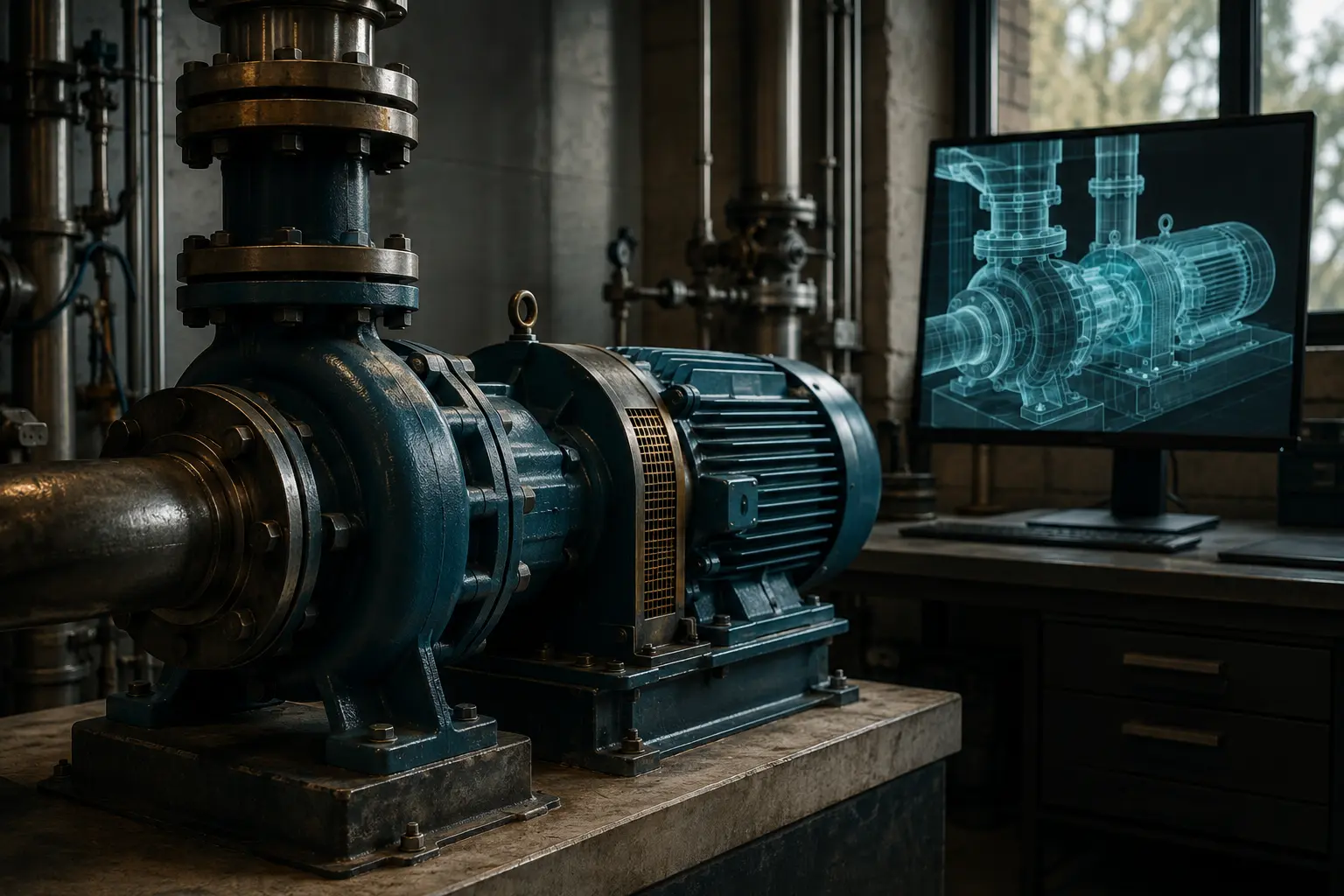
Every twin has a purpose boundary
A model designed to schedule maintenance does not automatically become a safe controller. A building-energy model does not necessarily represent evacuation behavior. A medical model calibrated to one population may not transfer to another. Credibility is always tied to an intended use, a set of conditions and a tolerated consequence of error.
Ask what action follows from the output. If the twin only helps a technician decide where to inspect, a false alarm may cost time. If it autonomously changes pressure, dosage or vehicle motion, the same error has a different risk. “Accurate” without a variable, time horizon, operating range and decision threshold is marketing language.
Sensors do not remove interpretation
A live data feed feels like contact with reality, but every sensor has placement, calibration, latency, resolution and failure modes. Missing values may be filled. Measurements may be filtered. A temperature at one point becomes a claim about an entire machine. The twin inherits those choices.
More data can improve a model and also produce a denser illusion of completeness. The system may be richly observed where sensors are cheap and nearly blind where human judgment, organizational behavior or rare events matter. The dashboard shows what the instrumentation can express.
Prediction is not a window into the future
NIST treats forecasting as foundational to digital-twin functions such as monitoring, optimization and decision support. Forecasts remain conditional: if the inputs, model structure and operating environment behave within expected bounds, an outcome is estimated with some uncertainty.
A forecast becomes dangerous when its confidence interval disappears in presentation. A single countdown to failure can conceal alternative models, noisy sensors and assumptions about future workload. The lesson from calibration applies here: fluent precision is not evidence of reliability. Track how often forecasts succeed at the decisions and horizons that matter.
Verification, validation and uncertainty are the work
Verification asks whether the implementation solves the equations or logic it claims to solve. Validation asks whether that model adequately represents the relevant physical behavior for its intended use. Uncertainty quantification asks how measurement error, parameter estimates, model form and future conditions affect the result.
NIST's manufacturing program treats verification, validation and uncertainty quantification as central to trustworthy digital twins. This is the opposite of a magical replica. The twin earns credibility through documented tests against the physical system, not through visual resemblance.
Validation is not permanent. Maintenance, software changes, sensor replacement, environmental drift and changed operating practice can move the physical system outside the evidence base. A credible twin needs a lifecycle: versioned assumptions, monitored performance, change control and retirement criteria.
The map can change the territory
Once a twin influences decisions, the physical system responds to the model. Maintenance is rescheduled. Operators adapt to alerts. Production is routed around predicted bottlenecks. The data distribution changes partly because the representation became an actor in the process.
This feedback is not exotic. A navigation app reroutes traffic and thereby changes traffic. A performance dashboard changes employee behavior. The more authority a twin receives, the less reasonable it is to treat its historical validation as independent of deployment.
Seven questions for any digital twin claim
- What is the physical referent? Name the asset, process, population or system the model is connected to.
- What decision is it authorized to support? Inspection, prediction and autonomous control are different jobs.
- What keeps it synchronized? Identify sensors, update frequency, manual inputs and known blind spots.
- What was validated? Ask for operating ranges, comparison data, error measures and the date of the last meaningful test.
- How is uncertainty shown? A point estimate without limits invites false certainty.
- Who can override it? Oversight needs information, time and authority, not a ceremonial approval button.
- What invalidates it? Define drift, hardware changes, missing data and performance thresholds that trigger review or shutdown.
Why the metaphor matters beyond engineering
Digital twins are an industrial technology, but the metaphor travels. People call profiles, health records and behavioral models “twins,” then quietly upgrade prediction into identity. A representation of your purchases or movement is not another you. It may still affect what opportunities, prices or interventions reach you.
The responsible response is neither mysticism nor dismissal. Models can be consequential without being complete. The scoreboard can shape the self; it does not become the self. The model can produce the right answer; that does not prove it has captured the reason.
What is established, inferred and still open
Sourced fact
NIST describes digital twins as computer models of physical systems and emphasizes synchronization, prediction, validation, standards and quantified uncertainty.
Engineering judgment
A twin's required accuracy and safeguards depend on its intended decision and the consequence of failure.
Reasonable inference
A visually detailed or frequently updated model can still be systematically blind to variables it was not designed to represent.
Speculation
Future twins may integrate far more of a system's lifecycle, but no amount of detail turns a representation into the physical thing itself.
Primary sources
- National Institute of Standards and Technology, Digital twins.
- NIST, Digital Twins for Advanced Manufacturing, updated July 20, 2026.
- NIST, Credibility consideration for digital twins in manufacturing.
This essay addresses model reasoning, not the design or certification of any safety-critical system.
END OF TRANSMISSION 030
Keep the question. Test the model.
Choose the narrowest claim the evidence can carry, then leave room for revision.