Noise-canceling headphones are excellent at one narrow job: reducing some external sound. They do not create focus by themselves, and ordinary consumer ANC is not automatically hearing protection. For many people, passive over-ear isolation, well-fitted earbuds, simple earplugs or moving to another room is the better answer.
Three tools that solve different problems
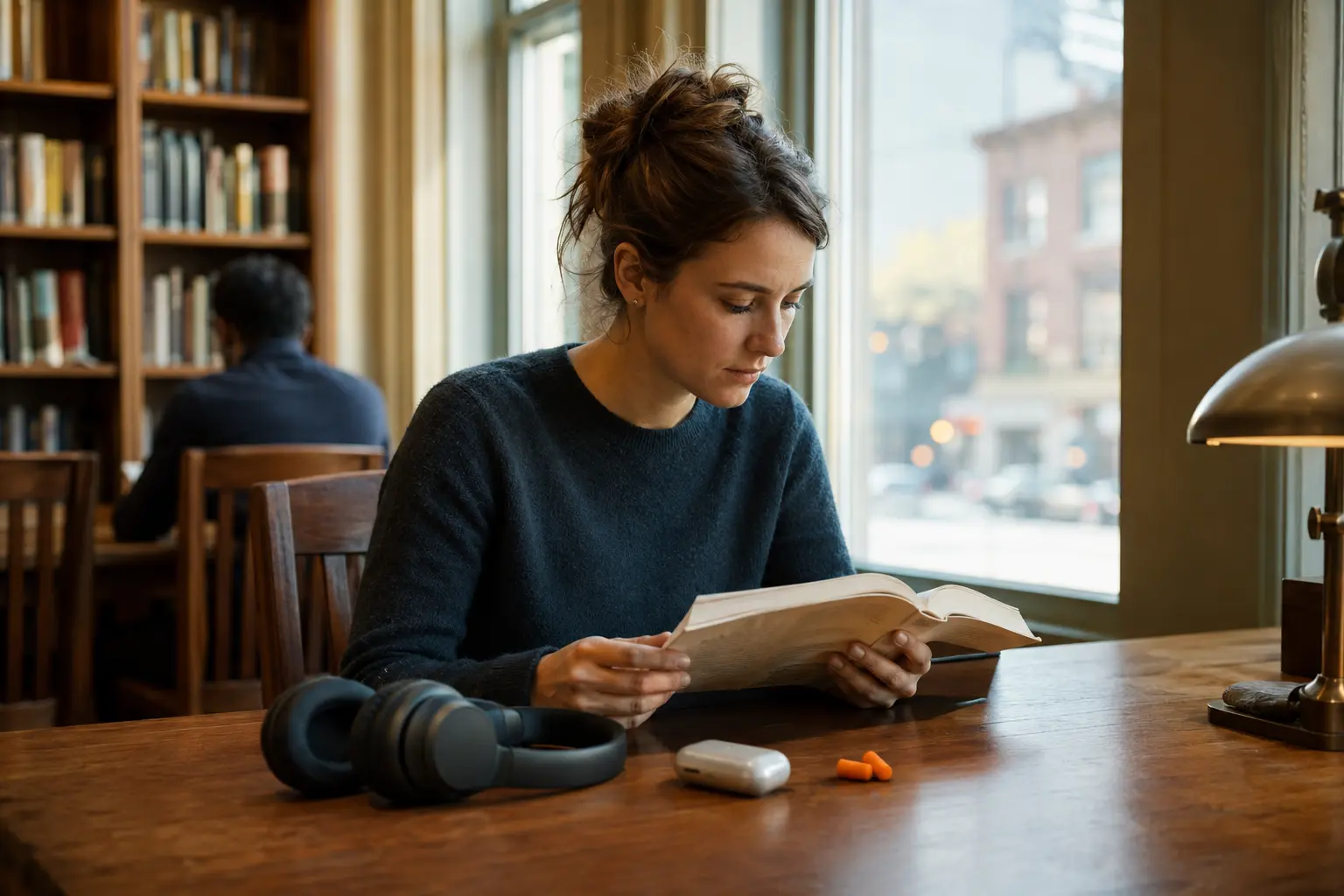
Active noise cancellation uses microphones and signal processing to reduce incoming sound, usually working best on continuous low-frequency noise such as engines, ventilation and travel rumble. Passive isolation uses the physical seal of cups or ear tips and can reduce a wider range of sound, depending heavily on fit. Earplugs are designed to attenuate sound without playing audio.
Conversation, keyboard clicks and sudden voices are harder for ANC than steady hum. A tight seal may reduce them more effectively, but tight products can create heat, pressure or fatigue. The right choice starts with the sound, session length and need for awareness.
Do not confuse quiet with hearing protection
CDC/NIOSH guidance says active noise cancellation should not be treated as occupational hearing protection unless the product is labeled with a Noise Reduction Rating. OSHA has likewise distinguished consumer noise-canceling headphones from hearing protectors in workplace guidance. A device that makes machinery feel quieter may still be inappropriate where certified protection is required.
ANC can indirectly help ordinary listeners by making music intelligible at a lower playback volume. That benefit depends on behavior. Turning the volume back up erases it. For hazardous environments, follow the applicable safety program and use correctly fitted rated protection.
Over-ear ANC: best for steady noise and long sessions
Large headphones provide room for microphones, batteries and cushions. They often reduce airplane, train and HVAC rumble well, and the physical cups add isolation. They also trap heat, press on glasses, occupy bag space and can make a user miss voices or alarms.
Fits: travel, open offices and focused work near continuous noise. Skip: hot environments, frequent conversation, small bags or anyone who dislikes headband pressure. Compare comfort, transparency mode, wired use, battery behavior when depleted and whether controls work without an account.
Noise-canceling earbuds: portable, fit-dependent quiet
Earbuds can combine electronic cancellation with a sealed tip. Their performance and bass response depend on fit; a poor seal turns an expensive system into an inconsistent one. They are easy to carry but easier to lose, and some ears do not tolerate hours of insertion.
Fits: commuting, short work blocks and people who already know which tip size seals comfortably. Skip: ear irritation, unreliable fit or a workflow that requires constant removal. Confirm replacement-tip availability, single-bud behavior and how the device signals low battery.
Earplugs: the honest no-audio tool
Foam or reusable earplugs are cheap, compact and free from accounts, charging and notifications. Correct insertion matters. They are appropriate when the goal is less sound, not better entertainment. Rated products may serve hearing-protection roles when selected and used under the relevant guidance.
Fits: reading, sleep, backup kits and work where audio would become another distraction. Skip: situations requiring conversation, alarms or traffic awareness. Never use isolation that conflicts with a workplace rule or safe operation of a vehicle or machine.
The no-buy option: change the sound field
Before buying, move away from doors, printers and vents. Close the gap under a door. Put a soft surface behind a bare wall. Schedule a difficult block before the room fills. Use a fan or low neutral sound only if it masks irregular voices without becoming content. A quieter location beats active cancellation because it removes the signal before it reaches the ear.
Try the headphones already owned with audio off. If the physical isolation solves most of the problem, the upgrade case is weak. If focus fails in silence, the bottleneck is probably not acoustic; use the structure in the Deep Work Field Manual or the enforcement options in Website Blockers for Focus.
A seven-day selection protocol
- Name the noise: steady rumble, speech, impacts, music or a mixture.
- Define the session: commute, two-hour desk block, reading or sleep.
- List sounds you must still hear: children, announcements, alarms or colleagues.
- Borrow or use a returnable option; do not judge from a five-minute demo.
- Test with no audio first, then with the lowest useful playback level.
- Record comfort after thirty, sixty and one hundred twenty minutes.
- Keep the device only if it reduces interruptions without creating pain, unsafe isolation or more media consumption.
A compact decision rule
For airplane or train rumble, start with over-ear ANC. For a mobile everyday carry, try sealed earbuds. For quiet without content, use earplugs. For unpredictable speech, prioritize physical seal and location over marketing claims. For hazardous noise, ignore the consumer category and follow rated hearing-protection guidance.
Official sources and volatile details
- CDC/NIOSH, Provide Hearing Protection, including the boundary between ANC and NRR-labeled protection.
- OSHA, interpretation on noise-canceling headphones and hearing protection.
- Apple, Active Noise Cancellation and Transparency mode; Bose, ANC explainer; Sony, noise-canceling principles and limits.
This guide is not medical or occupational-safety advice. Persistent ringing, pain or hearing changes deserve professional evaluation. Workplace protection must follow the applicable program and product rating.
END OF FIELD GUIDE 027
Keep the question. Test the model.
Choose the narrowest claim the evidence can carry, then leave room for revision.